Flat & Low-Slope Commercial Roof Replacement in London, Ontario
When your flat roof is past repair, a full replacement protects your building, inventory, and tenants for decades. We replace flat and low-slope commercial roofs across London and Middlesex County: warehouses, plazas, industrial units, and multi-tenant buildings.
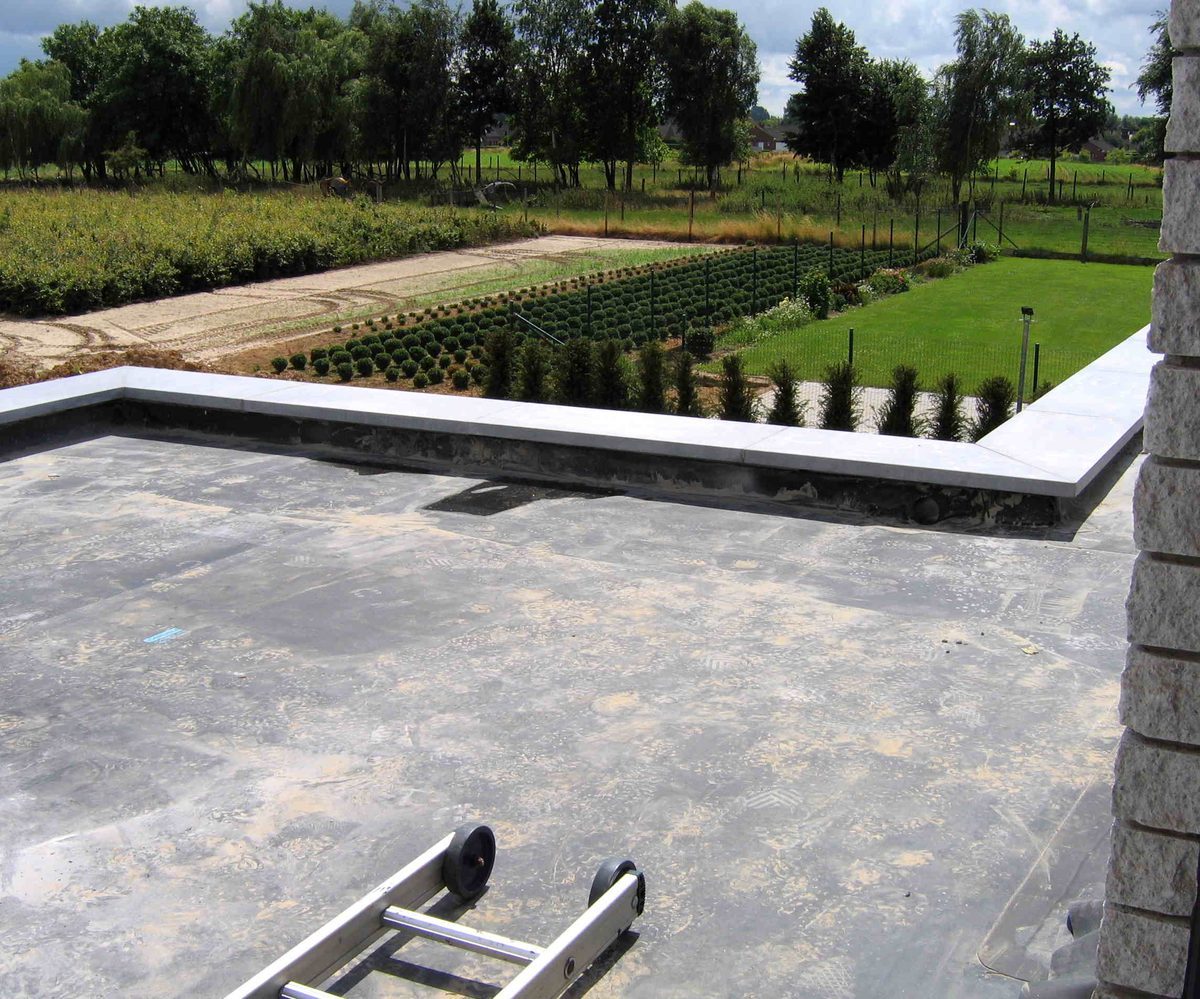
Our flat roof replacement process
- Free on-site assessment: we inspect the deck, drainage, insulation, and existing membrane
- Written scope & quote: itemized, with the system and warranty spelled out
- Tear-off or recover: we advise which is right for your deck and budget
- New membrane install: TPO, EPDM, or modified bitumen to suit the building
- Drainage & flashing detailing: the parts that actually cause leaks, done right
- Final inspection & warranty: manufacturer + workmanship coverage
Systems we install
We match the roofing system to your building and how it's used, not a one-size-fits-all upsell. Most London commercial flat roofs are best served by single-ply TPO or EPDM membrane, which handle Ontario's freeze-thaw cycles well and offer long, predictable service life. Where a building takes heavy rooftop foot traffic or needs multi-layer redundancy, modified bitumen (SBS) is often the better call, and sloped or architectural buildings may be better in standing-seam metal. We'll recommend the one with the best cost-per-year for your building, not the biggest invoice.
Membrane thickness and attachment: the details that decide lifespan
Two roofs with the same membrane can perform very differently depending on thickness and how it's attached. TPO and EPDM are sold in 45, 60, and 80 mil, and for a commercial roof with rooftop mechanical equipment or regular foot traffic, we generally spec 60 mil or heavier, the thin 45 mil grade is really built for lighter-duty applications. Attachment method matters just as much:
- Mechanically fastened: the membrane is screwed through the insulation into the deck. Fast, cost-effective, and the right call on most steel-deck warehouses.
- Fully adhered: the membrane is bonded with adhesive across the whole surface. Better wind uplift resistance, often specified on taller buildings or exposed sites.
- Ballasted: the membrane is held down with river-stone ballast. Lowest material cost per square foot, but the deck has to be engineered to carry that dead load, so it's not an option on every building.
Which one is right depends on your deck type, building height, wind exposure, and structural load capacity, not a default we apply to every job.
Tear-off or Recover, and Why Insulation Matters
If your existing membrane is dry and structurally sound, a recover (installing the new system over the old) can save real money and landfill. But if moisture has already saturated the insulation, recovering over it just seals the problem in to keep rotting the deck, so we check first, with a cut test or infrared scan, and tear off when the evidence says to. A replacement is also the moment to fix drainage for good: tapered insulation can be built in to end ponding water and raise your R-value at the same time, cutting heating costs through a Southwestern Ontario winter.
Not sure it's time yet?
If you're weighing it, the signs a commercial roof needs replacing (widespread blistering, recurring leaks in multiple spots, saturated insulation, and ponding that never drains) are worth reading before you spend. Often a targeted repair is still the smart call, and we'll say so.
Minimal disruption to your business
We stage work to keep your building operating: sequencing sections, protecting entrances, and cleaning up daily. If you have an active leak while you decide, our 24/7 emergency team can stabilize it first.
What your warranty actually covers
A commercial roof replacement carries two separate warranties, and it's worth knowing the difference before you sign anything:
- Manufacturer's material warranty: covers defects in the membrane itself. Length depends on the system and thickness specified, thicker membrane and a manufacturer-certified installer generally qualify for a longer term.
- Workmanship warranty: covers our installation: seams, flashing, and detailing. This is the one that matters most in practice, since a flat roof rarely fails because the membrane itself was defective, it fails because a seam or a piece of flashing was installed wrong.
We put both in writing before work starts, along with what voids them (unauthorized rooftop penetrations after install are the most common one) so there are no surprises later.
Permits and the City of London process
A full roof replacement on a commercial building typically requires a building permit from the City of London, and larger or structurally-modified jobs may need engineered drawings. We handle the permit application as part of the project, not as an extra line item you have to chase down yourself.
Questions specific to a flat roof replacement project
Can my building stay open during the work?
Almost always, yes. We section the roof and sequence the work so occupied areas stay dry and protected, and we coordinate noisy phases (tear-off, especially) around your business hours where possible.
What happens if it rains partway through the tear-off?
We only expose as much deck as we can dry-in the same day, and we keep temporary waterproofing on hand for anything left open overnight. A properly run tear-off should never leave your building exposed to weather.
Do rooftop units (HVAC, exhaust fans) need to be moved?
Usually not moved, but every curb and penetration gets re-flashed as part of the job, that's one of the most common places a "finished" roof leaks a year later if it's rushed. We coordinate timing with your mechanical contractor if a unit does need to be temporarily lifted.
How is this different from a residential roof replacement?
Scale, membrane type, and access. Commercial flat roofs use single-ply membrane or modified bitumen instead of shingles, are quoted by the square foot rather than a flat price, and often need crane or hoist access for material and equipment that a house roof never requires.
Flat roof replacement across London & the region
We replace flat roofs on the big-footprint warehouses and distribution centres in the Highway 401 corridor industrial areas (Innovation Park, Trafalgar and along Veterans Memorial Parkway), the multi-tenant plazas around Hyde Park, Masonville and White Oaks, and downtown office and institutional buildings, plus Woodstock, St. Thomas and Strathroy along the 401/402.