Commercial Roof Repair & Leak Detection in London, Ontario
A small leak can ruin inventory, disrupt tenants, and quietly rot your roof deck. We find the real source, not just the visible stain, and repair it to last.
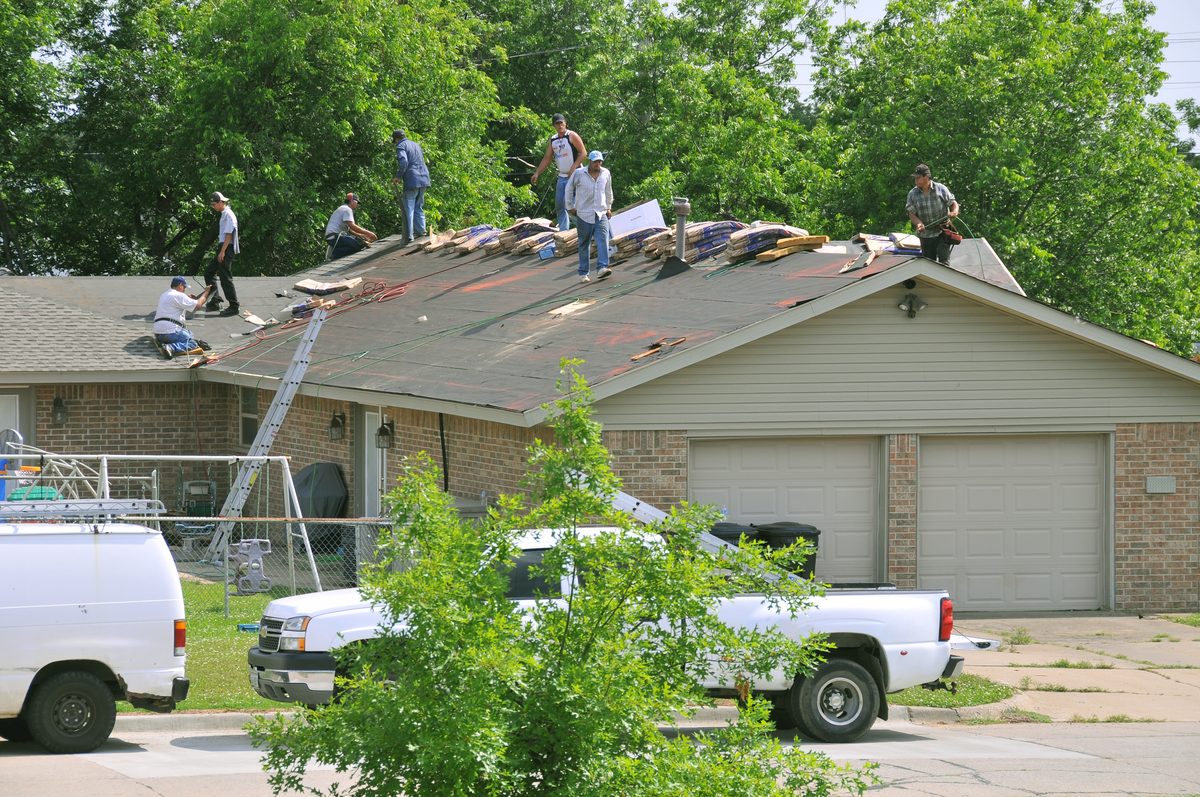
Common commercial roof problems we fix
- Membrane splits, punctures, and open seams
- Failed flashing around walls, curbs, and penetrations
- Ponding water and blocked or undersized drains
- Storm and wind damage
- Deteriorated caulking and pitch pans
- Leaks around HVAC units and skylights
How we find the real source of a leak
Water rarely enters where it drips. It travels along the underside of the membrane, across the deck, and down a joist before it shows up on a ceiling tile, so the stain inside can be metres from the actual breach. That's why we don't just seal the nearest-looking crack. We trace the leak back to its origin: inspecting the high-risk details first (flashings, seams, drains, and the curbs around rooftop HVAC units and skylights), water-testing the suspect areas, and, when moisture has already spread under an intact-looking membrane, using infrared moisture scanning to map the wet insulation before we open anything up. You get a repair aimed at the cause, not a smear of caulk over the symptom, with photos of what we found.
Why London's climate is hard on flat roofs
Southwestern Ontario's freeze-thaw cycling is the number-one ager of a commercial roof here. Meltwater works into a hairline seam or a tired flashing lap, freezes overnight, expands, and splits it a little wider, then does it again the next day, all winter long. Add heavy, wet lake-effect snow load, spring rain that exposes every drainage weakness, and summer UV baking the membrane, and the same weak points fail season after season. Blocked drains and ponding water accelerate all of it. A repair that ignores the London climate won't hold. Ours are detailed for it: the right membrane-compatible materials, properly terminated, so the fix survives the next freeze-thaw.
Repair or replace?
We'll tell you honestly. If a repair buys you good years, we repair. If you're paying for the same leak twice a year, a full flat roof replacement is the cheaper path long-term. Either way, a maintenance plan keeps small issues from becoming big ones.
Active leak right now? Our 24/7 emergency crew can stabilize it today.
How we repair each membrane type
A repair is only as good as its compatibility with what is already on the roof. Using the wrong material is the most common reason a patch lifts within a season, so the method changes with the system:
- TPO: repaired with hot-air welding, not adhesive. A correctly welded patch fuses into the existing sheet and becomes a continuous surface. Every weld gets probe-tested along its edge before we leave.
- EPDM: repaired with primer and seam tape or a compatible cover strip. The critical step is surface preparation, because EPDM holds a film of weathering and dirt that will defeat any adhesive if it is not cleaned back properly.
- Modified bitumen (SBS): repaired with torch-applied or self-adhered patches matched to the existing cap sheet, with the granule surface prepared so the patch bonds to the membrane rather than to loose granules.
- Built-up roofing (BUR): repaired with compatible bitumen and reinforcing ply. Older gravel-surfaced systems need the ballast swept clear and reset properly afterward.
If we cannot identify the membrane with certainty from the surface, we take a small sample and confirm before choosing materials. Guessing here is what produces a repair that fails the following winter.
Core sampling and moisture surveys
When a roof has been leaking for a while, the damage is usually wider than the breach. Water spreads sideways through the insulation and saturates it well beyond the entry point, and saturated insulation loses most of its R-value while quietly corroding the deck underneath. Surface inspection cannot see any of that.
A core sample settles it. We cut a small test section through the roof assembly, examine the actual layers, check whether the insulation is wet, and patch the opening properly the same visit. It tells us how many roof systems are already stacked up there, what condition the deck is in, and whether a repair is even the right call. On larger roofs we pair it with an infrared moisture scan to map the wet area first, then core only where the scan flags a problem, which keeps the number of test cuts to a minimum.
This matters commercially, not just technically. Repairing over saturated insulation means paying twice: once for a patch that stops the drip, and again when the deck fails underneath it.
Temporary stabilization versus a permanent repair
These are two different jobs and we are clear about which one you are getting. A temporary stabilization stops water entering right now, in bad weather, at night, or while a claim is being processed. It is not meant to last, and we say so in writing.
A permanent repair needs a dry, prepared surface and conditions the materials can actually cure or weld in. Where weather forces a stabilization first, we book the permanent repair as a separate scheduled visit rather than quietly charging for a patch and calling it finished.
What affects the cost of a commercial roof repair
We do not quote roof repairs sight unseen, and any company that gives you a firm number over the phone is guessing. What actually drives the price:
- Access: whether the crew and materials reach the roof by interior stair, ladder, or need a hoist or lift
- How far the water has travelled: a single seam repair is a different job from replacing saturated insulation across a section
- Membrane type and age: older or discontinued systems can need specialty compatible materials
- Detail complexity: curbs, penetrations, and flashing terminations take longer than open-field membrane work
- Deck condition: corroded or rotted decking found during the repair has to be addressed before the membrane goes back
- Timing: emergency and after-hours response differs from scheduled work
You get an itemized written scope before anything starts, so you can see exactly what is being repaired and why.
What you receive after the repair
- Photos of the cause we found, not just the finished patch
- A written description of the repair and the materials used
- Our workmanship warranty on the repaired area, in writing
- An honest note on anything else we saw that will need attention, with a timeframe
That last item matters. A roof rarely has exactly one problem, and you should be able to budget for the next one instead of being surprised by it.
Questions about commercial roof repairs
How long does a commercial roof repair take?
Most straightforward repairs, a seam, a flashing detail, a puncture, are done in a single visit of a few hours. Repairs involving saturated insulation replacement run longer because the wet material has to come out and the area has to be dried and rebuilt before the membrane is closed up.
Will a repair void my manufacturer's roof warranty?
It can, if it is done with incompatible materials or by someone not approved to work on that system. This is a real risk on roofs still inside their manufacturer warranty period. Tell us the system and warranty status up front and we will work to keep it intact, or tell you plainly if the warranty has already lapsed.
Can a commercial roof be repaired in winter?
Yes, with limits. Emergency stabilization happens in any weather. Permanent repairs depend on the material: hot-air welding on TPO works in cold conditions, while adhesives and sealants have minimum application temperatures and will not cure properly below them. If it is too cold for a lasting repair we will stabilize it and schedule the permanent fix rather than install something we know will fail.
How do you find a leak when nothing is visible on the roof?
By working from the inside out. The interior stain tells us where the water exits, and from there we examine the roof assembly above and uphill of it, checking the details that fail most often first. Water testing confirms a suspected entry point, and infrared scanning finds saturated insulation under a membrane that still looks intact from above.
Do you repair roofs your company did not install?
Yes, most of our repair work is on roofs installed by someone else. We identify the existing system first and repair it with compatible materials rather than defaulting to whatever is on the truck.
Repairing commercial roofs across London & Middlesex County
We repair commercial and industrial roofs right across the city: the large-span warehouses in the east-end industrial areas around Innovation Park, Trafalgar and the Highway 401 corridor, the retail plazas around Hyde Park and Masonville, downtown's flat-roofed offices, and the manufacturing plants along Veterans Memorial Parkway, plus Strathroy, St. Thomas and Woodstock. Wherever your building sits, the visit starts the same way: a proper diagnosis and an honest, written recommendation.